
About this page
WallStPal explains public SEC filings and congressional stock trade reports in plain English. Nothing is for sale; the site is free and supported by ads.
How to read it
- Form 4
- The form a company insider (officer, director or owner of more than 10%) must file with the SEC within two business days of buying or selling the company's shares.
- 13F
- A quarterly list of U.S. stocks held by an investment manager with more than $100 million, filed within 45 days after each quarter ends.
- STOCK Act
- A 2012 law that requires members of Congress to report stock trades by themselves, a spouse or a dependent child within 45 days.
A real example
In January 2016, when bank stocks were falling, JPMorgan Chase CEO Jamie Dimon bought 500,000 JPMorgan shares with his own money, worth about $26 million. His Form 4 made the purchase public within days, and investors read it as a strong sign of confidence.
Explain it like I'm 13
We read the long, boring forms that grown-ups file with the government and tell you what they say in normal words.
Data from public SEC filings and congressional reports. Information, not investment advice. Check every number against the filing linked on the page.
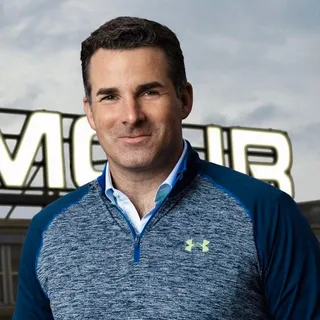
Kevin Plank
Founder and CEO of Under Armour
- Born
- 1972, Kensington, Maryland
- Latest filing
- Aug 28, 2026
Who is Kevin Plank?
Plank, a former University of Maryland football player, founded Under Armour in 1996 to make shirts that wick away sweat. He was CEO until 2020 and returned to the role in 2024.
Stock they own
| Stock | Shares | Price | Value | 52-week change |
|---|---|---|---|---|
| UA Under Armour, Inc. | 6,206,831 | $4.37 | $27.1M | −$3.04M (−10.1%) |
Shares are the amounts reported as owned after their latest Form 4 for each company, directly and through trusts or other entities. Value uses the latest weekly price we hold. The 52-week change is what the same number of shares gained or lost in value; it is not their profit, because founders' cost is not disclosed and options and other holdings are not included.
Gifts, option exercises and other changes
| Date | Stock | What happened | Shares | Owned after |
|---|---|---|---|---|
| Aug 26, 2026 | UA | Received as pay | 2,165,533 | 6,206,831 |
| May 15, 2026 | UA | Shares withheld for tax | 61,636 | 4,041,298 |
| Jun 3, 2025 | UA | Shares withheld for tax | 19,947 | 4,277,789 |
| May 15, 2025 | UA | Shares withheld for tax | 63,031 | 2,297,736 |
| May 15, 2025 | UA | Received as pay | 2,000,000 | 4,297,736 |
| Feb 15, 2025 | UA | Shares withheld for tax | 22,672 | 2,390,152 |
| Jun 3, 2024 | UA | Received as pay | 2,123,894 | 2,412,824 |
| May 15, 2024 | UA | Shares withheld for tax | 68,168 | 362,227 |
| Feb 15, 2024 | UA | Shares withheld for tax | 25,867 | 456,584 |
Examples
Founders often sell stock on a schedule set months in advance (a 10b5-1 plan) to pay taxes or diversify, so a sale is not always a sign of doubt. A large open-market purchase with their own money is rarer and usually says more. In January 2016, JPMorgan Chase CEO Jamie Dimon bought 500,000 JPMorgan shares, about $26 million, and the purchase was widely read as confidence in the bank.
Explain it like I'm 13
Imagine the founder of your favorite game company owns a giant pile of its shares. Each time they sell some, give some away, or buy more, they must tell the government within two business days. This page adds up those notes so you can see how big the pile is and what they have been doing with it.
From public SEC filings. Information, not investment advice. Values are estimates at the latest weekly price.